
The True Meaning of Oxchuc in Mayan Cultural Glyphs
Martín Gómez Ramírez
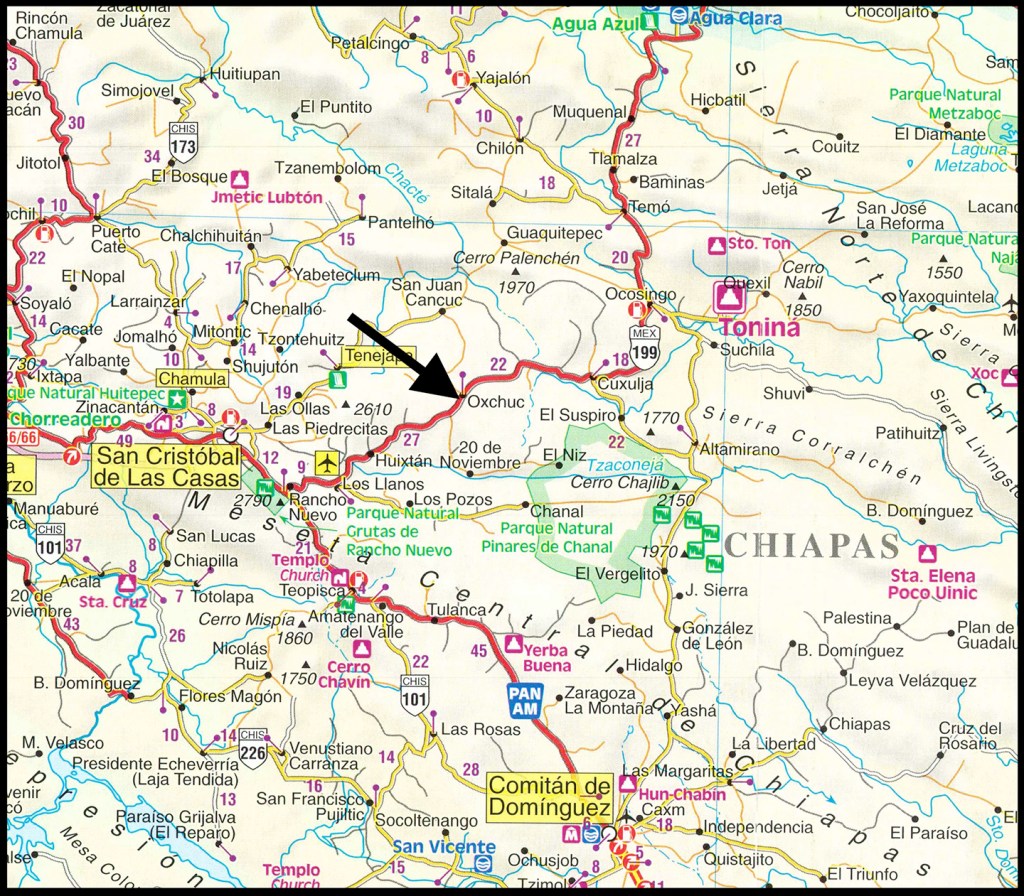
Martín Gómez Ramírez (Maya Tseltal) was a key MAM (Mayas for Ancient Mayan/Maya Antiguo para los Mayas) colleague in our days of workshops and international congresses. He made the Ocosingo Congreso de Epigrafistas Mayas (2014) happen. But well before our meeting him, he was a known literary force in Mexico and beyond, with multiple publications and public presentations as award-winning Indigenous author and poet.
I visited Martín in his home in Abasolo on my last trip (2025) and was saddened to see him blind and infirm from diabetes. What could I do? I made him a promise: “Tell me which of your books you would most like to have translated to English and published on my website.” With no hesitation he said El Verdadero Significado de Oxchuc en Glifos de la Cultural Maya.
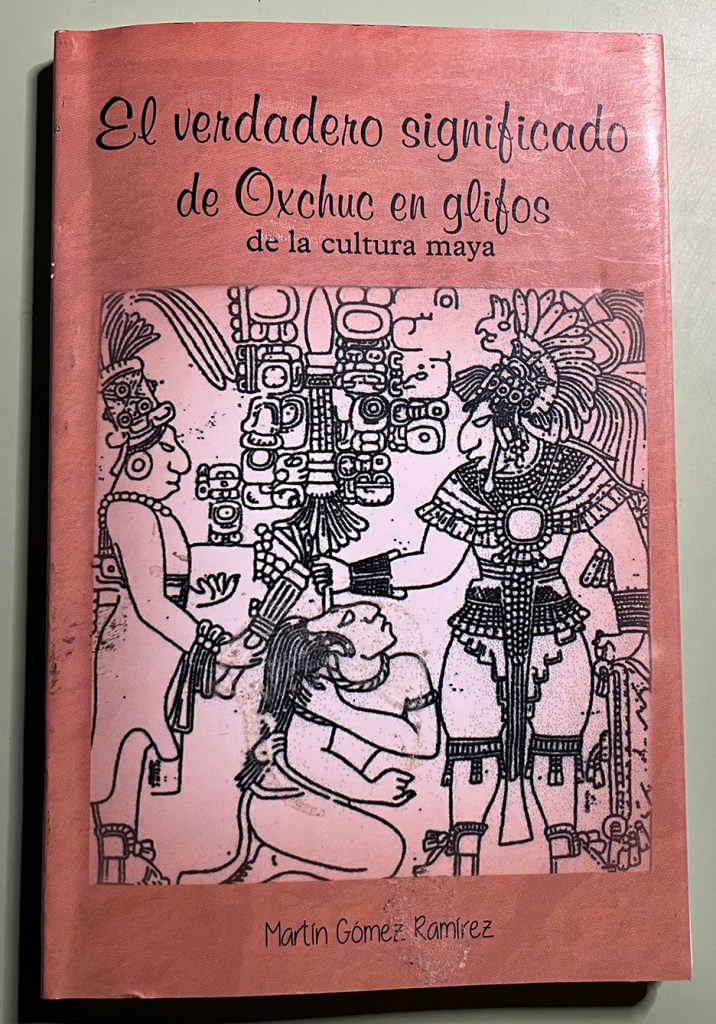
A year later, the English translation is ready, and I’m happy to report Martín is still with us, and he is thrilled to see this happen. He wrote to me “Es un orgullo para mí un Chiapaneco que ha sido traducido en inglés el conocimiento maya para los mayas y otras lenguas. Muchas gracias, gracias y gracias.”
Why is this book important? Martín answers that question directly in a manifesto from the book, p110:
“History has been erased by several factors, such as the establishment of Catholic religious doctrine, a single language, the abandonment of our ritual spaces, the harmonious relationship of the community with nature, the burning of different shapes and sizes of vessels and codices with hieroglyphic signs, as well as the destruction of large buildings, our temples, and in their place the building of large colonial architectural centers. However, the great Mayan scribes and priests still preserve the sacred ts’ib script. Now it is up to the firstborn to give strength and vitality to the cosmogonic elements and the right to our ancestral knowledge.
“It is no longer just essential to write down the mother tongue of Indigenous peoples. I stress the importance of recovering and using the sacred glyphs in everyday life, at least to record names of towns, proper names, lineages, two- or three-syllable announcements, and remnants of ritual or poetic language or metaphorical words related to sacred objects, colors, and natural beings. This is necessary and important, out of pride in being speakers of an Indigenous language, for the preservation and transmission of the true roots of our ancestral tongues. And of course, we are made of corn and speak words of freedom—people of corn.”
It is an honor for us to publish these words, and this book, to give Martín Gómez’s passionate pronouncements a wider, international audience. We outsiders are blessed to hear from the Indigenous heart and mind as we seek to understand the deeper meaning of the ancient hieroglyphic writing.
-Bruce Love
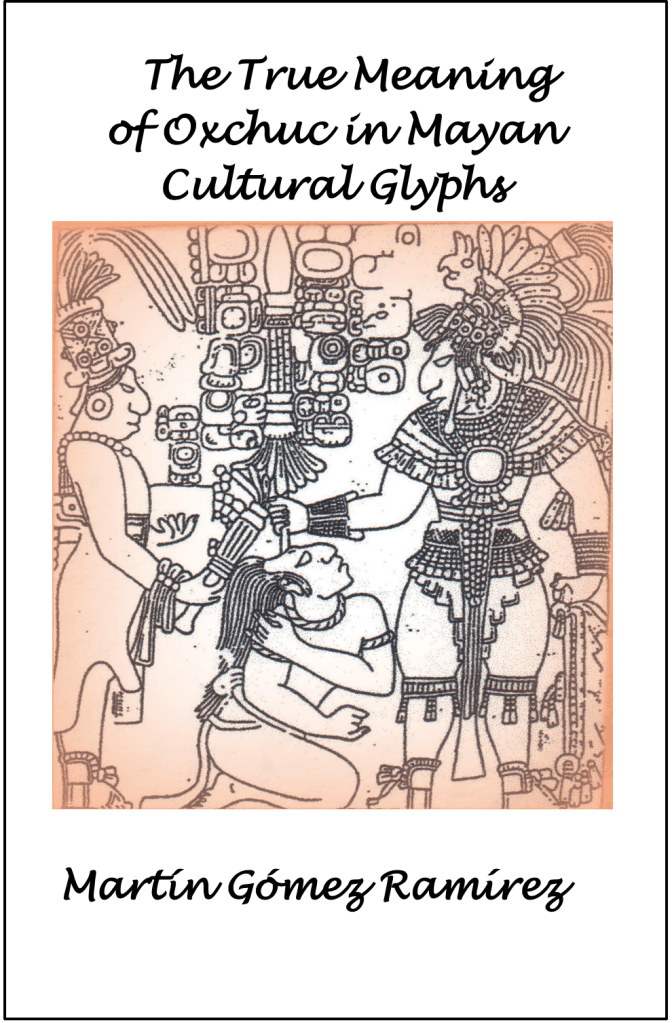
Suggested citation: Gómez Ramírez, Martín. The True Meaning of Oxchuc in Mayan Cultural Glyphs. Translated by Larry Richman. Contributions to Mesoamerican Studies, March 18, 2026. https://brucelove.com/research/contribution-016
Downloadable PDF: Gómez Ramírez_The True Meaning of Oxchuc in Mayan Cultural Glyphs_2026
Partial reproduction of this work is permitted provided that the source is cited.
 Contributions to Mesoamerican Studies